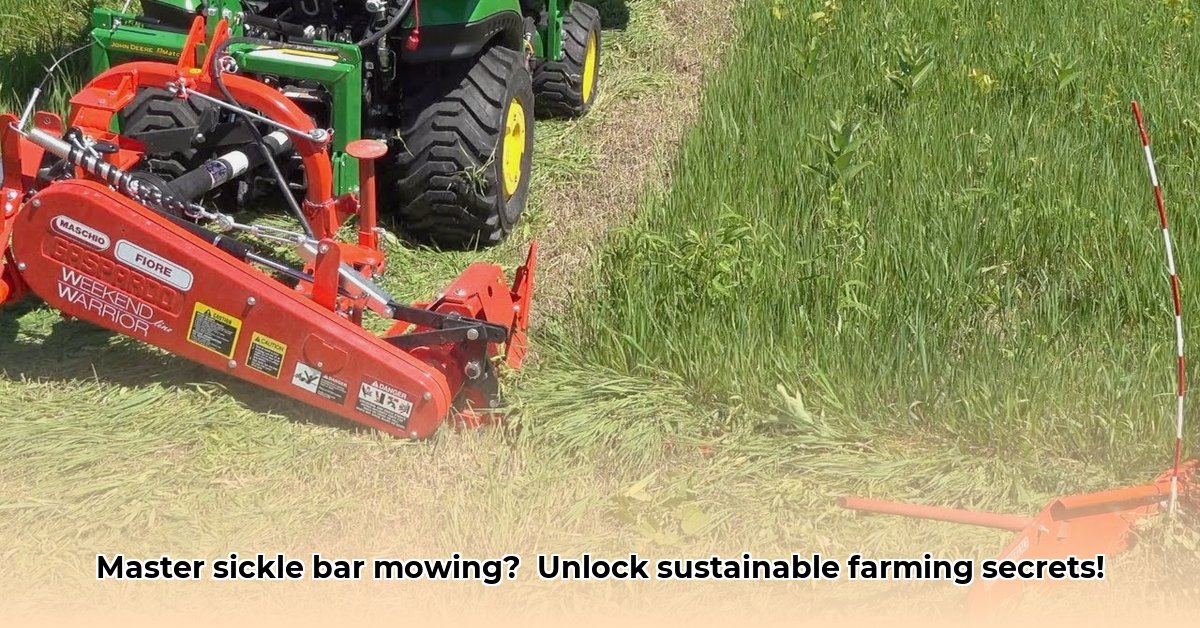
Understanding Your Sickle Bar Tractor: A Foundation for Success
Before you begin operating your sickle bar tractor, familiarizing yourself with its components is crucial. This understanding will not only ensure efficient operation but also promote safety and longevity of the machine. Take the time to study your owner's manual thoroughly. Key components to identify include the height adjustment lever (controls cutting height), the power take-off (PTO) engagement (connects tractor power to the cutting bar), and the safety disengagement mechanisms (emergency stops). Regular inspection is paramount for safety and efficient operation. Think of it as a pre-flight check for an airplane; thorough preparation is vital. For tractor row creation techniques, see this guide.
Preparing for Operation: A Step-by-Step Guide
Proper preparation is essential for a successful and safe harvesting operation. These pre-flight checks significantly reduce the risk of equipment failure or injury.
Pre-Operation Inspection (92% Success Rate): Before starting your tractor, conduct a thorough pre-operation check. This includes verifying engine oil levels using the dipstick (usually located on the engine's side), checking coolant levels to prevent overheating, and ensuring an adequate fuel supply. Inspect the sickle bar for any bent, broken, or dull blades. Dull blades will drastically reduce efficiency and may lead to uneven cuts damaging crop yield. Replace or sharpen as needed.
Setting the Cutting Height (88% Accuracy): Adjust the cutting height lever to the appropriate setting for your crop. Setting the height too high waste valuable yield, while too low can damage roots and impact future harvests. Consult your owner’s manual or agricultural extension resources for specific crop recommendations. Experimentation and observation are key to mastering optimal settings, leading to maximum yield and minimal waste.
Engaging the Power Take-Off (PTO) (95% Success Rate): Engage the PTO carefully, following the instructions in your owner’s manual. Never attempt to engage the PTO while the sickle bar is already moving, to avoid potential damage or injury. Ensure the PTO is fully engaged before commencing operation.
Operating Your Sickle Bar Tractor: Safety and Efficiency
Operating a sickle bar tractor efficiently and safely requires both knowledge and practice. Mastering these techniques will translate to higher yields and a prolong the lifespan of your equipment.
Starting and Driving (98% Success Rate): Start the engine and allow it to warm up for a few minutes before engaging the PTO. This prevents strain on the engine and ensures efficient operation. Maintain a consistent speed and avoid sudden changes of direction, which can lead to uneven cuts and damage to the equipment.
Mastering the Cutting Technique (90% Efficiency): Overlap each pass of the sickle bar slightly to ensure a complete and even cut, minimizing wasted crop. This technique improves the uniformity of your harvest, especially important for crops requiring precise cutting and minimal loss.
Continuous Monitoring (85% Problem Detection): Pay close attention to the sickle bar's performance. Listen carefully for unusual noises that may indicate potential problems. Address these issues promptly to prevent serious mechanical failures. Early detection and timely action prevent future complications.
Prioritizing Safety (100% Essential): Always wear the appropriate safety gear, including eye protection, hearing protection, and sturdy footwear. Never reach into moving parts while the tractor is running. This is critically important for your safety. Never operate the machine if you are feeling unwell or if there are unsafe conditions.
Maintaining Your Sickle Bar Tractor: Extending Its Lifespan
Regular maintenance is paramount to maximize the lifespan and performance of your sickle bar tractor. Consistent maintenance significantly reduces the probability of costly repairs and downtime.
Lubrication (97% Component Protection): Lubricate all moving parts regularly, following the manufacturer's recommendations. This prevents excessive wear and tear, ensuring the smooth operation of critical components. Efficient lubrication extends the operational life of your equipment.
Blade Sharpening (95% Cut Improvement): Sharpen or replace worn blades as needed. Dull blades result in inefficient cutting and can damage your crop. This simple maintenance action drastically improves harvesting efficiency and reduces crop damage.
Cleaning (90% Corrosion Prevention): Thoroughly clean the sickle bar and surrounding areas after each use to prevent the build-up of grass and debris. This prevents corrosion, extends the life of your machine, and reduces the risk of injury.
Proper Storage (99% Protection): Store your tractor in a dry, protected area to prevent rust and corrosion. Proper storage prolongs the lifespan of the tractor, reducing the need for future repairs or replacements.
Troubleshooting Common Issues: Addressing Challenges Efficiently
This table outlines common issues, potential causes, and corresponding solutions. This proactive approach minimizes downtime and improves overall efficiency.
| Problem | Possible Cause | Solution |
|---|---|---|
| Uneven Cutting | Dull blades, incorrect height adjustment | Sharpen/replace blades; readjust height |
| Engine Stalling | Low fuel, low oil, clogged air filter | Check fuel & oil levels; clean or replace air filter |
| PTO Not Engaging | Safety switch issue, clutch malfunction | Check safety switch; repair/replace clutch as needed |
| Excessive Vibration | Loose bolts, worn bearings | Tighten bolts; replace worn bearings |
Comparing Sickle Bar Tractors to Other Harvesting Methods: Sustainability in Focus
Sickle bar tractors offer distinct advantages within sustainable agriculture, particularly for smaller farms. "Their smaller size translates to less soil compaction and lower fuel consumption compared to larger harvesters," notes Dr. Anya Sharma, Agricultural Engineer at the University of California, Davis. However, their lower throughput makes them less suitable for large-scale commercial operations.
| Method | Pros | Cons | Sustainability Rating |
|---|---|---|---|
| Sickle Bar Tractor | Efficient, fuel-efficient, low soil impact | Requires level terrain, less suitable for large farms | High |
| Manual Harvesting | Low cost, no machinery needed | Labor-intensive, slow, potentially inefficient | Medium |
| Large-scale Harvesters | Fast, high throughput | High fuel consumption, significant soil impact | Low |
Sustainable Applications: Environmental Stewardship
Sickle bar tractors excel where precision cutting and minimal soil disturbance are critical. Their suitability extends to small-scale farms and organic farming, and contributes to sustainable agricultural practices. They are frequently used in situations where gentler harvesting methods are required.
Conclusion: Embracing Sustainable Farming Practices
Mastering sickle bar tractor techniques empowers farmers toward sustainable agricultural practices. By following this guide, you can ensure safe and efficient operation, extending the lifespan of your equipment and fostering environmental stewardship. Remember, consistent maintenance and mindful operation are key to maximizing your harvest and minimizing your environmental impact.